Living with ongoing back or neck pain can make everyday activities more challenging. You might notice stiffness when getting out of bed, discomfort after sitting at work, or an aching lower back after a busy day. While these symptoms can be frustrating, understanding what causes them is an important step toward finding the right care.
Chronic pain is pain that lasts or keeps returning for more than three months. It can affect your back, neck, muscles, joints, or other areas of the body. Sometimes it develops after an injury, while other times it is connected to an ongoing condition or increased sensitivity in the nervous system.
The encouraging news is that chronic pain can often be managed with the right combination of movement, exercise, lifestyle changes, and professional care. For certain patients with back or neck discomfort, spinal decompression therapy may also be worth exploring as a nonsurgical treatment option.
If you have been wondering what is chronic pain, what causes it, and how to manage it, this guide will help you understand your symptoms and the available treatment options.
What Is Chronic Pain?
Chronic pain refers to discomfort that continues or returns for longer than three months. It may remain in one area or affect different parts of the body.
Unlike acute pain, which usually develops after an injury and improves as the body heals, chronic pain can continue even after the original injury has recovered.
For example, someone may experience lower back pain after lifting a heavy object. Although the initial strain improves, discomfort may continue because of reduced movement, muscle sensitivity, or other contributing factors.
Over time, the nervous system can also become more sensitive to pain signals. This may cause certain movements or activities to feel uncomfortable.
Understanding these changes helps healthcare professionals develop a treatment plan that addresses both physical symptoms and daily function.
What Is Chronic Pain Syndrome?
Chronic pain syndrome is a term sometimes used when long-lasting pain begins affecting other parts of daily life, including sleep, energy, mood, and physical activity.
Someone with persistent back pain may find it harder to exercise regularly or get comfortable at night.
A personalized care plan can help address these challenges through movement, rehabilitation, healthy routines, and appropriate treatment.
What Are the Types of Chronic Pain?
Healthcare professionals generally describe three main pain mechanisms.
Type of chronic pain |
Description |
Common examples |
|
Nociceptive pain |
Pain associated with actual or threatened tissue damage |
Muscle strains, joint inflammation |
|
Neuropathic pain |
Pain caused by damage or disease affecting the nervous system |
Certain nerve injuries and neuropathies |
|
Nociplastic pain |
Pain involving changes in how the nervous system processes pain signals |
Some forms of widespread pain, including fibromyalgia |
Some people experience a combination of these pain types.
Identifying the likely pain mechanism can help guide treatment and improve how symptoms are managed.
What Does Chronic Pain Feel Like? Common Symptoms
Chronic pain feels different for everyone. Some people experience a steady ache, while others notice stiffness, burning sensations, or discomfort during specific movements.
Common chronic pain symptoms include:
-
Persistent aching in the lower back, neck, or joints
-
Muscle tightness or stiffness
-
Sharp discomfort during bending or lifting
-
Burning or tingling sensations
-
Pain that travels into the arms or legs
-
Reduced flexibility or difficulty with certain movements
-
Sleep disturbances caused by discomfort
-
Tiredness after everyday activities
Symptoms may remain steady or change throughout the day.
For example, someone with chronic lower back pain might feel relatively comfortable while walking but experience stiffness after sitting for several hours.
Recognizing these patterns can help you explain your symptoms clearly during a healthcare appointment.
Does Chronic Pain Cause Fatigue?
Yes. Chronic pain can contribute to fatigue, especially when discomfort interrupts sleep or makes everyday tasks more demanding.
When the body does not get enough quality rest, muscles may feel tired and physical activities can become more difficult.
Improving sleep habits, staying appropriately active, and managing pain may help support better energy levels.
Persistent fatigue can also have other causes, so it is important to discuss ongoing tiredness with a healthcare professional.
What Causes Chronic Pain?
Chronic pain can develop for several reasons. Sometimes it begins after an injury, while other times it is related to joint changes, nerve irritation, or long-term health conditions.
Understanding what causes chronic pain helps determine which treatments may be useful.
Previous Injuries
Sports injuries, automobile accidents, and work-related strains can sometimes contribute to ongoing discomfort.
Even after the initial injury improves, surrounding muscles and joints may need additional rehabilitation to regain comfortable movement.
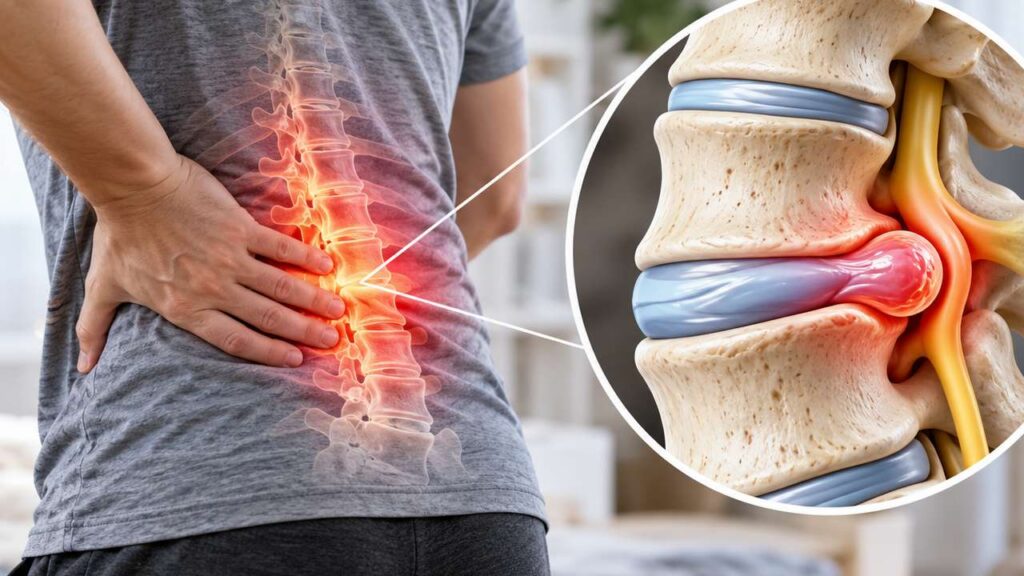
Spinal Disc Problems
The discs between the vertebrae help absorb forces during movement.
When a disc becomes irritated or herniated, it may contribute to back pain or affect a nearby nerve.
Some people experience discomfort that travels into the buttocks, legs, shoulders, or arms.
Joint Changes and Arthritis
Changes in spinal joints can sometimes cause stiffness and discomfort.
Although age-related changes are common and do not always cause pain, they may contribute to symptoms in certain individuals.
Repetitive Physical Activities
Repeated lifting, bending, or remaining in one position for long periods can aggravate existing musculoskeletal discomfort.
Changing positions regularly and improving physical strength may help make these activities more comfortable.
Sleep and Stress
Sleep quality and stress can influence how the nervous system responds to pain.
Healthy routines, regular movement, and stress-management techniques can support an overall chronic pain management plan.
What Causes Chronic Lower Back Pain?
Chronic lower back pain is discomfort in the lumbar spine that lasts or returns for more than three months.
The lower back supports many everyday movements, including walking, bending, lifting, and changing positions.
Several conditions may contribute to ongoing symptoms.
Herniated or Bulging Discs
A herniated disc occurs when material inside a spinal disc pushes through its outer layer.
If the disc irritates a nearby nerve, it may cause lower back discomfort, leg pain, tingling, or numbness.
Degenerative Disc Changes
Spinal discs naturally change with age.
In some people, these changes may contribute to discomfort, although many individuals have disc degeneration without experiencing pain.
Spinal Stenosis
Spinal stenosis occurs when spaces around spinal nerves become narrower.
Some people experience leg discomfort or numbness during standing or walking, with symptoms improving when sitting or bending forward.
Muscle and Joint Problems
Reduced muscle strength, previous injuries, and certain joint conditions may contribute to persistent lower back discomfort.
Many cases of chronic lower back pain do not have one clearly identifiable structural cause.
A professional assessment can help determine which factors are most relevant to your symptoms.
What Is Chronic Back Pain?
Chronic back pain refers to persistent or recurring discomfort in the upper, middle, or lower back.
It can affect movement, work activities, exercise, and sleep.
The good news is that many people can improve their physical function through appropriate exercise, activity changes, and individualized treatment.
What Is Chronic Neck Pain?
Chronic neck pain involves discomfort or stiffness in the cervical spine that continues or returns for more than three months.
It may be associated with muscle tension, previous injuries, joint conditions, or nerve irritation.
Treatment may include movement exercises, activity guidance, and appropriate manual therapy.
For selected patients, cervical traction may also be discussed after a clinical evaluation.
What Is Spinal Decompression Therapy?
Spinal decompression therapy is a nonsurgical treatment that uses gentle, controlled traction to stretch the spine.
It is designed to temporarily change the mechanical forces acting on spinal discs, joints, and surrounding tissues.
For people exploring treatment options for ongoing back or neck discomfort, spinal decompression offers an approach that does not involve incisions or anesthesia.
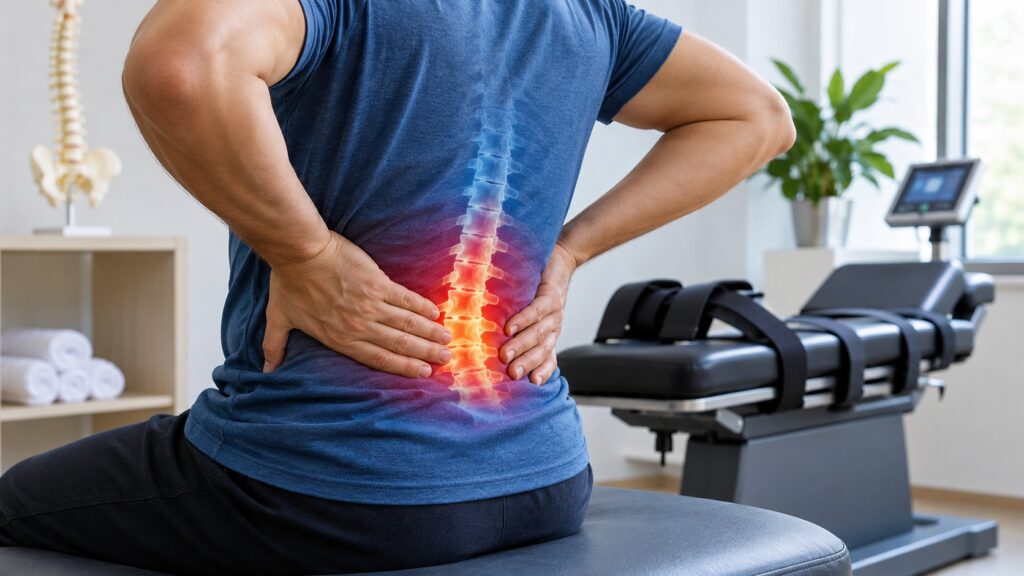
During treatment, the patient lies on a specialized table while the equipment applies a controlled pulling force.
Depending on the treatment area, the provider may use supports or a harness to help position the body comfortably.
How Does Spinal Decompression Therapy Work?
Spinal decompression equipment applies traction to a selected area of the spine.
The pulling force may gradually increase and decrease throughout the session.
This controlled stretching aims to reduce mechanical loading on certain spinal structures and may temporarily improve comfort for some patients.
Spinal decompression is sometimes discussed for conditions involving spinal discs and nerve-related symptoms.
However, its ability to permanently correct disc problems has not been established, and the treatment response varies between individuals.
What Happens During a Spinal Decompression Session?
A typical session may involve the following steps.
Step 1: Initial Evaluation
Your provider reviews your symptoms, health history, and relevant examination findings to determine whether treatment is appropriate.
Step 2: Comfortable Positioning
You lie on a specialized treatment table while the provider adjusts the supports or harness.
Step 3: Gentle, Controlled Traction
The equipment gradually applies a pulling force to the selected area of the spine.
Step 4: Treatment Monitoring
Your provider monitors your comfort and adjusts the treatment when necessary.
Step 5: Follow-Up Recommendations
Your provider may recommend exercises, movement guidance, or other appropriate care to support your treatment goals.
The treatment is nonsurgical, and most patients can return to their usual activities afterward if they feel comfortable.
Does Spinal Decompression Work for Chronic Pain?
Does Spinal Decompression Work?
Yes, Spinal decompression may help patients experience symptom relief, particularly when their discomfort involves certain disc-related or nerve-related problems.
The treatment offers a nonsurgical approach that can be considered as part of an individualized care plan.
Some clinical studies have reported improvements in pain and function following traction-based treatments.
However, larger research reviews have found inconsistent results for chronic lower back pain, and routine traction is not recommended in several clinical guidelines.
This means the most helpful approach is to evaluate each patient’s condition before deciding whether spinal decompression is worth trying.
Potential Benefits of Spinal Decompression Therapy
For appropriately selected patients, possible advantages include:
-
Nonsurgical treatment: The procedure does not require incisions or anesthesia.
-
Adjustable treatment: Providers can modify the traction force based on patient comfort and clinical needs.
-
Potential symptom relief: Some patients report reduced discomfort following treatment.
-
Supportive care option: It may be considered alongside exercise and other appropriate rehabilitation strategies.
-
Individualized approach: Treatment decisions can be based on symptoms, examination findings, and personal goals.
These potential benefits are not guaranteed, and the treatment is not necessary for every person with chronic pain.
A healthcare professional can help you compare spinal decompression with other options and decide what best fits your needs.
Is Spinal Decompression Safe?
Yes, Spinal decompression is a nonsurgical procedure that may be suitable for certain patients following a careful evaluation.
Because it does not involve an incision or general anesthesia, it avoids the risks associated with those aspects of surgery.
However, spinal traction can sometimes cause soreness or increased discomfort, and it is not appropriate for every spinal condition.
Who May Be a Candidate for Spinal Decompression?
A healthcare professional may consider discussing traction-based treatment with someone who:
-
Has ongoing back or neck discomfort
-
Has been evaluated for possible disc-related symptoms
-
Wants to explore nonsurgical treatment options
-
Can safely tolerate traction
-
Understands the treatment’s possible benefits and limitations
Patients with conditions such as severe osteoporosis, spinal fractures, spinal instability, certain previous spinal surgeries, or progressive neurological symptoms may require alternative care.
A thorough assessment helps identify the safest and most appropriate treatment plan.
What Does a Chiropractor Do for Lower Back Pain?
Chiropractors evaluate musculoskeletal conditions involving the spine, muscles, and joints.
For patients experiencing chronic lower back pain, chiropractic care may focus on improving movement, reducing discomfort, and supporting everyday physical activities.
Treatment begins with understanding the patient’s symptoms, medical history, and functional goals.
Chiropractic Care for Chronic Lower Back Pain
Depending on the patient’s condition, care may include:
Chiropractic Adjustments
Spinal manipulation or mobilization may help some patients experience modest improvements in lower back pain and movement.
Spinal Decompression Therapy
For selected patients, traction-based treatment may be discussed as an additional nonsurgical option.
Movement and Exercise Recommendations
Strengthening and mobility exercises can help improve physical function and support long-term back health.
Posture and Activity Guidance
Practical advice about sitting, lifting, working, and staying active can help patients manage everyday discomfort.
Personalized Wellness Strategies
Healthy movement habits, sleep routines, and gradual increases in physical activity may support ongoing progress.
The goal is to help patients move more comfortably and remain active while using treatments suited to their individual needs.
How to Get Rid of Chronic Lower Back Pain: A Practical Approach
If you are wondering how to get rid of chronic lower back pain, the most useful approach is to focus on reducing symptoms, improving strength, and building habits that support comfortable movement.
Although there is no single treatment that works for everyone, many people can make meaningful progress.
1. Understand Your Symptoms
A professional evaluation can help identify possible causes of discomfort and guide appropriate treatment.
Knowing which movements or activities aggravate your symptoms can also help you manage them more effectively.
2. Stay Physically Active
Gentle activities such as walking, swimming, or comfortable stretching can help maintain mobility.
Start with activities you can manage and gradually increase your movement as tolerated.
3. Strengthen Your Back and Core
Exercises that improve the strength of your back, hips, and abdominal muscles can support everyday activities.
A qualified healthcare professional can recommend exercises based on your physical condition.
4. Explore Suitable Treatment Options
Chronic lower back pain treatment may include exercise therapy, chiropractic care, physical therapy, pain education, or medical treatment when needed.
For selected patients, spinal decompression may also be discussed.
Combining appropriate treatment with regular movement can support a broader pain management plan.
5. Make Everyday Activities More Comfortable
Small changes can help reduce discomfort during work and daily routines.
Consider taking short movement breaks, adjusting your workstation, and varying your sitting and standing positions.
6. Maintain Healthy Sleep Habits
Consistent sleep routines support physical and emotional well-being.
Finding a comfortable sleeping position and maintaining regular sleep hours may help you feel more rested.
The key is consistency. Gradual progress in movement, strength, and daily comfort can make a meaningful difference over time.
When Should You Seek Professional Care for Chronic Pain?
If back or neck pain continues for several months, affects your sleep, or makes everyday activities uncomfortable, it may be time to seek professional care. Getting the right guidance can help you understand your symptoms and explore treatment options that support better movement and daily comfort.
At Orenda Chiropractic in Reno, NV, Dr. Travis Rodman provides personalized chiropractic care for patients experiencing ongoing back pain, neck pain, and other musculoskeletal concerns.
The clinic offers:
Whether you’re dealing with chronic lower back pain, recurring neck stiffness, or disc-related discomfort, a professional evaluation can help determine which treatment approach may be appropriate for you. Book an appointment with Dr. Travis Rodman at Orenda Chiropractic in Reno, NV, to discuss your symptoms and explore personalized care options for better movement and everyday comfort.
Location: Reno, NV
Website: Chiropractor in Reno, NV
Phone: (775) 636-7611
Map: Orenda Chiropractic – Reno, NV
Conclusion: Take a Positive Step Toward Managing Chronic Pain
Understanding what is chronic pain can help you make informed decisions about your health and daily comfort.
Although ongoing back or neck pain can affect your routine, there are several ways to manage symptoms and improve physical function.
Regular movement, strengthening exercises, healthy habits, and individualized professional care can all play valuable roles in chronic pain management.
For some patients with disc-related discomfort, spinal decompression therapy may offer an additional nonsurgical option to consider.
At Orenda Chiropractic in Reno, NV, Dr. Travis Rodman offers personalized chiropractic care and spinal decompression therapy to help patients explore appropriate options for managing back and neck discomfort.
If chronic back or neck pain is affecting your daily activities, our team is here to help you understand your symptoms and explore care options suited to your needs.
Take the next step toward more comfortable movement. Contact Orenda Chiropractic in Reno, NV, today to learn more about our services and how we may help you manage chronic pain.
Frequently Asked Questions
1. Can Spinal Decompression Help Relieve Chronic Back Pain?
Spinal decompression may help patients manage back discomfort, particularly when disc-related symptoms are involved. It uses controlled traction to stretch the spine and may provide temporary symptom relief. Its effectiveness varies, so a professional evaluation is important before starting treatment.
2. What Is the Best Chronic Lower Back Pain Treatment?
The best treatment depends on the cause of your symptoms and your individual needs. Exercise, physical therapy, movement education, and appropriate medical care are commonly recommended. Chiropractic treatment may also be considered for some musculoskeletal conditions.
3. Can Chronic Pain Improve Over Time?
Yes. Many people experience improvements in pain, mobility, and daily function with suitable treatment and consistent activity. Progress may happen gradually, and the right care plan can help patients work toward realistic goals.
4. Is Spinal Decompression Therapy Painful?
Spinal decompression generally creates a stretching sensation. Some patients find the experience comfortable, while others may notice soreness or increased discomfort. Your provider should monitor your response and stop or adjust treatment if symptoms worsen.
5. How Many Spinal Decompression Sessions Are Needed?
The number of sessions varies depending on the patient’s condition, treatment goals, and response. There is no established number of visits that guarantees results. Your provider should explain the proposed schedule and review progress regularly.
6. Can Chiropractic Care Help With Chronic Neck Pain?
Chiropractic care may help some patients manage musculoskeletal neck discomfort through appropriate manual therapy, exercise guidance, and movement recommendations. A clinical evaluation helps determine which treatments are suitable and whether additional medical assessment is needed.
About the Author: Dr. Travis Rodman
Dr. Travis Rodman — Chiropractor in Reno, NV
Dr. Travis Rodman grew up in Woodland, Washington. His experience working in construction and industrial machining inspired his interest in helping people with physical strain and everyday musculoskeletal challenges.
He attended Life Chiropractic College West from 2015 to 2018. During his training, he gained experience working with athletes, older adults, individuals with scoliosis, and families.
Before establishing Orenda Chiropractic in Reno, Nevada, Dr. Rodman practiced in Atlanta, the San Francisco Bay Area, and the Mariana Islands.
His approach focuses on individualized chiropractic care and helping patients make informed decisions about their musculoskeletal health.