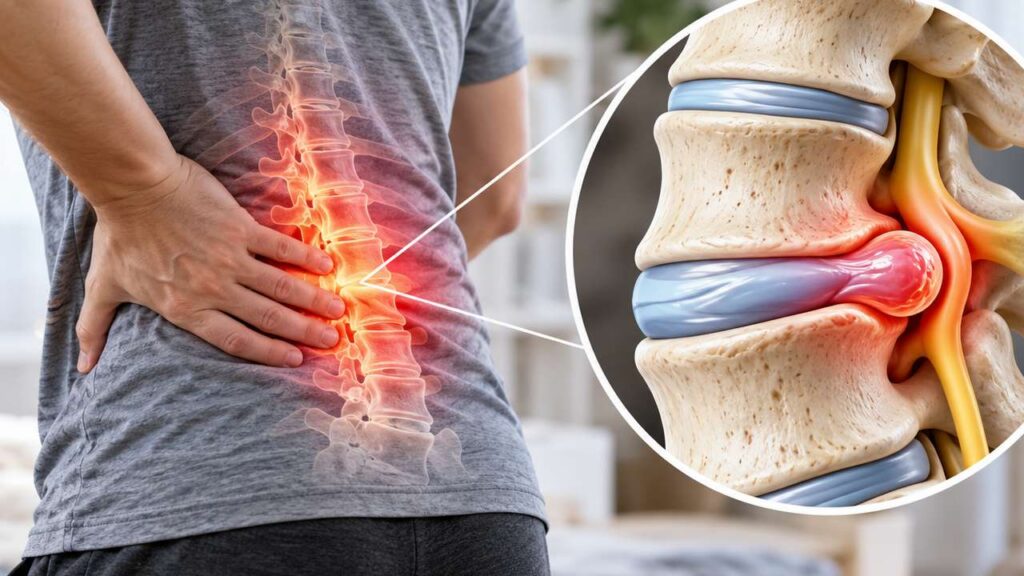
You notice that one shoulder sits slightly higher than the other. Maybe your child’s clothes hang unevenly, or you see a small bump along their back when they bend forward. These changes might seem harmless, but they can sometimes be early signs of scoliosis.
So, what is scoliosis, and should you be concerned?
Scoliosis is a condition in which the spine curves sideways and rotates instead of following its usual alignment. Some people have mild curves that never cause problems, while others develop more noticeable changes that require medical attention.
The good news is that many people with scoliosis live active, healthy lives. Understanding the condition can help you recognize potential symptoms, seek an accurate diagnosis, and explore appropriate treatment options.
This guide explains the causes, types, symptoms, diagnosis, and treatment of scoliosis, including where chiropractic care may fit into a broader care plan.
What Is Scoliosis?
Your spine naturally curves forward and backward when viewed from the side. These curves help your body maintain balance, support movement, and absorb everyday stress.
When viewed from behind, however, the spine should appear relatively straight.
Scoliosis occurs when the spine develops an abnormal sideways curve measuring at least 10 degrees on an X-ray. The vertebrae, which are the small bones forming your spine, also typically rotate.
This rotation can make one shoulder, hip, or side of the rib cage appear more prominent.
Depending on the shape of the curve, the spine may resemble the letter C or S.
What Is Mild Scoliosis?
Mild scoliosis generally describes a spinal curve measuring approximately 10 to 25 degrees.
Many people with mild scoliosis experience no pain or movement problems. In growing children, doctors usually monitor the curve to determine whether it is changing.
Mild scoliosis does not automatically require a brace, surgery, or chiropractic adjustments. Treatment decisions depend on age, symptoms, remaining growth, and the risk of progression.
How Common Is Scoliosis?
Scoliosis is more common than many people realize.
Adolescent idiopathic scoliosis, the most common form in children and teenagers, affects approximately 1% to 3% of children between ages 10 and 16.
Although mild curves affect boys and girls, girls are more likely to develop curves that progress enough to require treatment.
Scoliosis can also develop in adults, particularly as the spinal discs and joints change with age.
Having scoliosis does not necessarily mean someone will experience chronic pain, disability, or serious health complications.
What Are the Different Types of Scoliosis?
Not every spinal curve develops for the same reason. Understanding the types of scoliosis helps healthcare professionals determine appropriate monitoring and treatment.
1. Idiopathic Scoliosis
Idiopathic scoliosis is the most common type. The term idiopathic means that no single cause has been identified.
It is commonly classified by age:
-
Infantile: Develops before age 3.
-
Juvenile: Develops between ages 3 and 10.
-
Adolescent: Appears from around age 10 until skeletal maturity.
Adolescent idiopathic scoliosis is particularly important to monitor because curves can progress during rapid growth.
2. Congenital Scoliosis
Congenital scoliosis develops when one or more vertebrae form differently before birth.
The abnormal spinal structure can cause the spine to curve as a child grows.
3. Neuromuscular Scoliosis
This type occurs alongside conditions affecting muscle control or the nervous system.
Examples include cerebral palsy, muscular dystrophy, and certain spinal cord disorders.
4. Degenerative Scoliosis
Degenerative scoliosis typically develops in adulthood as spinal discs and joints undergo age-related changes.
It can contribute to back pain, stiffness, and sometimes nerve compression.
5. Syndromic Scoliosis
Some connective tissue and genetic disorders, including Marfan syndrome, are associated with scoliosis.
Each type requires an assessment based on its cause, severity, and likely progression.
What Causes Scoliosis?
One of the most common questions patients ask is, what causes scoliosis?
The answer depends on the type.
In most cases of adolescent idiopathic scoliosis, doctors cannot identify one specific cause. Researchers believe genetics and other biological factors contribute to its development.
Other causes or associated conditions include:
-
Abnormal vertebral development before birth
-
Neuromuscular disorders
-
Connective tissue disorders
-
Age-related spinal disc and joint degeneration
-
Certain spinal injuries or underlying medical conditions
Can Poor Posture Cause Scoliosis?
Poor posture, carrying a heavy backpack, or sleeping in an awkward position does not cause structural idiopathic scoliosis.
These habits may contribute to temporary discomfort, but they are not established causes of the condition.
Scoliosis also is not something a child develops simply because they sit incorrectly.
Family history, growth, and underlying health conditions are more relevant considerations.
What Are the Signs and Symptoms of Scoliosis?
The signs of scoliosis are often easier to notice than the symptoms, especially in children.
A child may have a visible spinal curve without experiencing any pain.
Common Signs of Scoliosis
Common visible changes can include uneven shoulders, an uneven waist, and rib prominence when bending forward.
Look for changes such as:
-
One shoulder appearing higher than the other
-
One shoulder blade sticking out more prominently
-
An uneven waistline
-
One hip appearing higher
-
A rib hump when bending forward
-
The upper body leaning slightly to one side
-
Clothing hanging unevenly
These signs do not automatically mean someone has scoliosis. A healthcare professional must examine the spine to determine whether further testing is needed.
What Are the Symptoms of Scoliosis?
Many children and teenagers with mild scoliosis have no noticeable physical symptoms.
Adults, particularly those with degenerative scoliosis, may experience:
-
Lower or middle back pain
-
Back stiffness
-
Muscle fatigue after prolonged standing
-
Reduced comfort during certain movements
-
Leg pain, tingling, or numbness when nerves are compressed
Severe chest curves can sometimes affect breathing, although this is uncommon with mild scoliosis.
Important: Back pain or numbness alone does not confirm scoliosis. Other spinal and neurological conditions can cause similar symptoms.
How Does Scoliosis Affect the Body?
The effects of scoliosis vary widely depending on the curve’s size, location, progression, and the person’s age.
For someone with a small, stable curve, scoliosis may have little effect on everyday activities.
Larger or progressive curves can change the alignment of the shoulders, rib cage, waist, and pelvis.
Some people experience muscle fatigue or difficulty finding comfortable positions while sitting or standing.
Possible Complications of Scoliosis
More significant curves may be associated with:
-
Persistent discomfort: Some adults experience ongoing back pain.
-
Nerve compression: Degenerative changes can contribute to leg pain, numbness, or weakness.
-
Reduced breathing capacity: Severe thoracic curves may restrict chest movement.
-
Body-image concerns: Visible spinal changes can affect confidence, especially during adolescence.
-
Curve progression: Certain curves continue worsening during growth or adulthood.
Most people with mild scoliosis do not develop serious complications.
However, progressive spinal changes should be evaluated rather than ignored.
How Is Scoliosis Diagnosed?
Diagnosing scoliosis involves examining the spine and measuring its curvature.
A healthcare professional typically begins by reviewing symptoms, medical history, family history, and any visible changes in posture.
A physical examination may include checking shoulder height, waist symmetry, spinal movement, and neurological function.
If scoliosis is suspected, a standing spinal X-ray can confirm the diagnosis and measure the curve.
What Is Scoliosis Screening?
Scoliosis screening is a simple examination used to identify signs of an abnormal spinal curve.
One common screening method is the Adam’s forward bend test.
During this test, the person bends forward while the examiner looks for unevenness in the back or rib cage.
A small device called a scoliometer may be used to measure trunk rotation.
An abnormal screening result may lead to further evaluation or imaging.
Medical organizations differ on routine screening of children without symptoms. The U.S. Preventive Services Task Force has concluded that evidence is insufficient to determine whether universal screening produces more benefits than harms.
When Is Scoliosis Diagnosed?
Adolescent idiopathic scoliosis is commonly diagnosed between ages 10 and 18, often during periods of rapid growth.
Congenital scoliosis may be identified much earlier, while degenerative scoliosis is usually diagnosed in adulthood.
The age of diagnosis matters because growing children may have a greater risk of curve progression.
How Is Scoliosis Measured?
Doctors use a measurement called the Cobb angle.
This angle is calculated from a standing spinal X-ray and describes the degree of sideways curvature.
A curve measuring 10 degrees or more meets the usual radiographic definition of scoliosis.
Doctors also consider skeletal maturity, curve pattern, and previous measurements when deciding whether treatment is necessary.
A small difference between X-ray measurements does not always indicate true progression because some measurement variation is expected.
How Is Scoliosis Treated?
Scoliosis treatment depends on several factors, including the patient’s age, curve severity, remaining growth, symptoms, and risk of progression.
There is no single treatment that is appropriate for everyone.
1. Observation and Monitoring
For mild curves, especially those with a low risk of progression, monitoring may be sufficient.
Doctors may recommend periodic examinations and X-rays to check whether the curve changes.
Some people never require additional treatment.
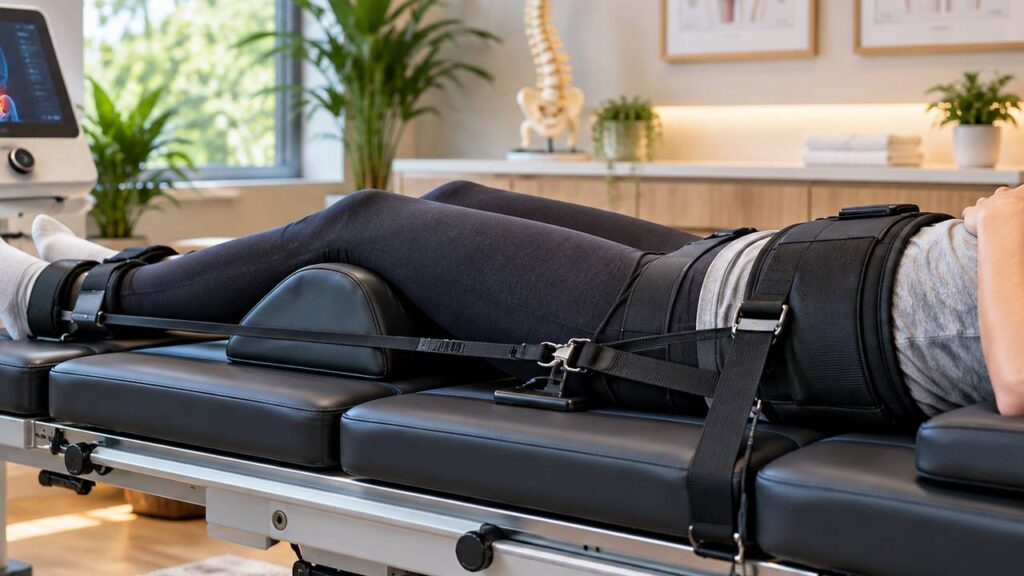
2. Scoliosis Bracing
Bracing is commonly recommended for selected growing adolescents with moderate curves, often around 25 to 40 degrees.
A brace is designed to reduce the risk of the curve becoming more severe as the child grows.
A major clinical trial published in the New England Journal of Medicine found that bracing reduced progression to the surgical threshold in adolescents with idiopathic scoliosis.
However, bracing generally aims to prevent worsening rather than permanently straighten an established curve.
3. Scoliosis-Specific Exercises
Specialized exercise programs, including the Schroth method, may help improve posture, body awareness, muscular control, and certain functional outcomes.
Some research suggests these programs may also help limit curve progression in selected patients, although results vary and evidence is less established than for bracing.
Exercises should be selected according to the individual’s curve and needs, ideally under appropriately trained professional supervision.
4. Surgery
Surgery may be considered when scoliosis is severe, continues progressing, or causes substantial functional problems.
For adolescents, spinal fusion is commonly considered when curves approach or exceed approximately 45 to 50 degrees.
Surgery aims to correct and stabilize the curve.
Potential risks include infection, blood loss, nerve injury, and complications involving spinal implants or fusion.
Not everyone with a large curve needs surgery. The decision requires careful discussion with a spine specialist.
Can a Chiropractor Help with Scoliosis?
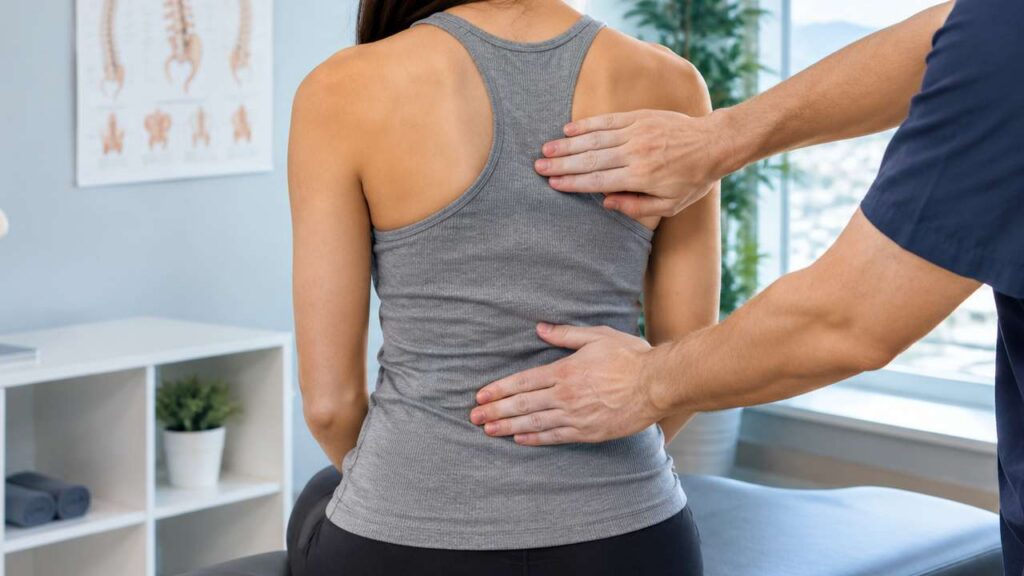
Yes, a chiropractor may help people with scoliosis manage related back pain, muscle tension, stiffness, and movement difficulties. Chiropractic care focuses on supporting spinal mobility, improving comfort, and helping patients stay active in their daily lives.
For people experiencing discomfort associated with scoliosis, a chiropractor can assess spinal movement, muscle function, and posture to better understand their symptoms. Based on the findings, care may include gentle chiropractic adjustments, mobility exercises, and practical advice for maintaining spinal health.
Chiropractic care can also be part of a broader approach to scoliosis management, particularly for adults experiencing musculoskeletal discomfort. While research has not established that chiropractic adjustments can correct the spinal curve itself, some patients may find conservative care helpful for managing associated symptoms.
Because every spinal curve is different, an individualized approach is important. Chiropractors can also work alongside other healthcare professionals when additional monitoring or specialized treatment is needed.
The goal of chiropractic care is to support comfort, mobility, and everyday function while helping patients make informed decisions about their spinal health.
Does Scoliosis Get Worse with Age?
Scoliosis does not always worsen over time.
The likelihood of progression depends on the type of scoliosis, the size of the curve, and whether the person is still growing.
In adolescents, curves are more likely to progress during rapid growth.
After skeletal maturity, smaller curves often remain relatively stable, while larger curves may continue progressing.
Adults can also develop degenerative scoliosis as spinal discs and joints change with age.
Regular physical activity, appropriate exercise, and attention to bone health may support general spinal function, but they cannot guarantee that a structural curve will stop progressing.
People with known scoliosis should discuss appropriate follow-up with their healthcare professional.
When Should You See a Healthcare Professional?
Consider arranging an evaluation if you notice uneven shoulders, a developing rib hump, persistent back discomfort, or visible changes in spinal alignment.
Children and teenagers with suspected scoliosis should receive an appropriate medical assessment, particularly while they are growing.
Adults should seek evaluation for worsening pain, increasing spinal asymmetry, or new symptoms affecting the legs.
Seek urgent medical attention for sudden or progressive weakness, new loss of bladder or bowel control, or significant breathing difficulty.
Early evaluation can help identify the underlying problem and determine whether monitoring, treatment, or specialist referral is appropriate.
Chiropractic Care for Scoliosis in Reno, NV — Orenda Chiropractic
If you have scoliosis and are experiencing back discomfort or limited movement, understanding the cause of your symptoms is an important first step.
At Orenda Chiropractic, Dr. Travis Rodman provides chiropractic care for patients in Reno, NV. The clinic offers chiropractic services for concerns such as back pain, neck discomfort, and movement-related problems.
The clinic’s listed services include:
While chiropractic adjustments cannot be relied upon to correct scoliosis, patients with associated musculoskeletal discomfort can contact the clinic to discuss whether an evaluation and conservative care may be appropriate.
Location: Reno, NV
Website: Chiropractor in Reno, NV
Phone: (775) 636-7611
Map: Orenda Chiropractic – Reno, NV
Conclusion
Understanding what is scoliosis is the first step toward recognizing spinal changes and making informed decisions about your health. Scoliosis is a sideways spinal curve that can develop during childhood, adolescence, or adulthood. Many people have mild curves that cause little or no discomfort and allow them to lead active, healthy lives.
The size of the curve, whether it progresses, and how it affects daily activities are important factors in determining the right approach to care.
Recognizing early signs, getting an accurate diagnosis, and exploring appropriate treatment options can help you manage your spinal health with confidence.
If you live in Reno, NV, and experience back pain, stiffness, or movement difficulties associated with scoliosis, book an appointment with Orenda Chiropractic to explore how personalized chiropractic care may help improve your comfort, mobility, and overall spinal wellness.
Frequently Asked Questions About Scoliosis
1. Is Mild Scoliosis Serious?
Mild scoliosis is usually not serious. Many people with small curves experience no symptoms and never need treatment beyond occasional monitoring. Growing children may require closer follow-up.
2. Can Scoliosis Be Treated Without Surgery?
Yes. Many cases are managed without surgery. Observation, bracing for selected growing adolescents, and scoliosis-specific exercises may be appropriate depending on the curve and individual circumstances.
3. Can Scoliosis Cause Back Pain?
Yes, scoliosis can be associated with back pain, particularly in adults. However, many adolescents with mild scoliosis have no pain. Back pain can also result from unrelated conditions.
4. Can Chiropractic Adjustments Straighten Scoliosis?
No reliable scientific evidence shows that chiropractic adjustments permanently straighten structural scoliosis. Chiropractic care may be considered for associated musculoskeletal discomfort, but it should not replace established scoliosis treatment.
5. Can You Live a Normal Life with Scoliosis?
Yes. Most people with mild or stable scoliosis can participate in everyday activities, exercise, work, and sports. Severe or progressive cases may require additional care or individualized activity guidance.