
Have you ever bent down and felt a sudden pain in your lower back? Or noticed tingling in your leg after sitting too long? You might assume it’s just a pulled muscle, but recurring discomfort could point to something else. One possible cause is a bulging disc, a common spinal condition that can sometimes irritate nearby nerves and cause pain.
So, what is a bulging disc, and should you be worried?
A bulging disc happens when one of the soft cushions between the bones of your spine extends beyond its usual edges. It is a common change in the spine, especially as people get older. Many bulging discs cause no pain at all. Others can irritate nearby nerves, leading to back pain, neck pain, tingling, or weakness.
The encouraging news is that many people with disc-related pain improve without surgery. Understanding what causes a bulging disc, how to recognize symptoms, and which treatments may help can make recovery feel less overwhelming.
What Is a Bulging Disc? Understanding Your Spine
Your spine contains a series of bones called vertebrae. Between most of these bones are soft, flexible cushions known as intervertebral discs.
Each disc has two main parts:
-
Annulus fibrosus: A strong outer layer made of tough, fibrous tissue.
-
Nucleus pulposus: A softer, gel-like center that helps absorb pressure.
These discs help your spine bend, twist, and handle everyday movements.
A bulging disc develops when part of a disc extends beyond its normal boundary. Think of a cushion that spreads outward when you press down on it. The disc may become flatter or wider as its structure changes.
Bulging Disc vs. Herniated Disc: What’s the Difference?
Although people often use these terms interchangeably, they describe different disc changes.
|
Bulging disc |
Herniated disc |
|
Disc tissue extends beyond its normal edges, usually over a broad area. |
Disc material pushes outward through a more localized area. |
|
Often associated with age-related changes. |
May develop from degeneration, strain, or injury. |
|
May cause no symptoms or irritate nearby nerves. |
May also cause no symptoms or irritate nearby nerves. |
|
Often managed without surgery. |
Also frequently managed without surgery. |
A herniated disc does not always involve a complete tear through the outer disc, and a bulging disc is not necessarily an early stage of herniation.
Both conditions are common in the lower back and neck.
What Causes a Bulging Disc?
There is not always one clear reason a disc begins to bulge. Most cases involve a combination of age-related changes, physical stress, and personal risk factors.
1. Natural Aging
As you age, spinal discs gradually lose some of their water content and flexibility. This can make them less able to handle pressure and more likely to change shape.
These changes are often part of normal aging and do not always mean something is wrong with your spine.
2. Repeated Bending and Heavy Lifting
Frequent lifting, bending, or twisting can place repeated stress on spinal discs, especially when movements are performed under heavy loads.
Jobs that involve physical labor may increase the risk of certain disc problems.
3. Prolonged Sitting and Limited Movement
Sitting for long periods can make existing back discomfort worse, particularly when you remain in one position.
Limited physical activity may also reduce the strength and endurance of muscles that support your spine. However, sitting or poor posture alone does not necessarily cause a disc to bulge.
4. Excess Body Weight
Additional body weight can increase the load on the lower back. It may contribute to disc-related problems, particularly when combined with other risk factors.
5. Smoking
Smoking is associated with faster spinal disc degeneration. It may affect the delivery of oxygen and nutrients to disc tissues.
6. Genetics and Previous Injuries
Some people inherit a greater tendency toward disc degeneration. Previous injuries, including falls and car accidents, may also contribute to disc damage.
Important: A bulging disc does not always result from something you did wrong. Many people develop disc changes without a specific injury.
Symptoms of a Bulging Disc: What Should You Look For?
The symptoms of a bulging disc depend on its location and whether nearby nerves are affected.
Some people discover a bulging disc during an MRI performed for another reason and have no symptoms.
When symptoms occur, they may affect the lower back, neck, arms, or legs.
Symptoms of a Bulging Disc in the Lower Back
A lumbar bulging disc may cause:
-
Dull or aching lower back pain
-
Pain that spreads into the buttock or leg
-
Burning or shooting pain associated with sciatica
-
Tingling or numbness in the foot or leg
-
Weakness in certain leg muscles
-
Discomfort during prolonged sitting or bending
Symptoms can affect one side or both sides, depending on which nerves are involved.
Symptoms of a Bulging Disc in the Neck
A cervical bulging disc may cause:
-
Neck pain or stiffness
-
Pain extending into the shoulder or arm
-
Tingling or numbness in the fingers
-
Weakness in the arm or hand
-
Difficulty with certain neck movements
Pain, tingling, and weakness can have many causes besides a bulging disc. A proper examination helps identify the source.
What Does a Bulging Disc Feel Like?
A bulging disc does not feel the same for everyone.
Some people describe a steady ache in their lower back, while others notice a sharp, electric-like pain traveling down an arm or leg.
Common descriptions include:
-
Dull aching: A persistent uncomfortable feeling in the back or neck.
-
Sharp pain: Sudden discomfort during certain movements.
-
Pins and needles: Tingling that may travel into the hands or feet.
-
Burning sensations: Nerve-related discomfort that spreads away from the spine.
-
Muscle weakness: Difficulty performing movements that were previously easy.
For example, someone with a symptomatic lumbar disc bulge may feel comfortable while walking but develop leg pain after sitting for a long time.
Another person may experience only mild stiffness despite having a noticeable bulge on an MRI.
The size of a bulging disc does not always match the severity of symptoms.
How Is a Bulging Disc Diagnosed?
A bulging disc cannot be diagnosed reliably from symptoms alone.
A healthcare professional typically begins by asking about your pain, activities, medical history, and any changes in strength or sensation.
Physical and Neurological Examination
An examination may include checking:
-
Spinal movement and flexibility
-
Muscle strength
-
Reflexes
-
Sensation in the arms or legs
-
Movements that reproduce or reduce symptoms
These findings help determine whether a nerve may be irritated or compressed.
Do You Need an MRI?
Not everyone with back or neck pain needs an MRI.
Imaging may be recommended when symptoms suggest serious nerve involvement, concerning medical conditions, or persistent problems that could change treatment decisions.
An MRI can show disc structures and nearby nerves. However, an imaging result must be considered alongside your symptoms and examination.
A bulging disc on an MRI is not automatically the cause of your pain.
Can a Bulging Disc Heal on Its Own?
Yes, symptoms associated with a bulging disc can improve naturally, even when the disc does not return completely to its previous shape.
As irritation settles, nearby nerves may become less sensitive. Muscles can regain strength, and everyday movement may become easier.
It is important to understand the difference between symptom recovery and structural healing.
A person can feel much better and return to normal activities even if a disc bulge remains visible on imaging.
In many cases, conservative treatment and gradual activity are enough to manage symptoms.
Complete bed rest is generally not recommended. Staying gently active within comfortable limits can help maintain strength and function.
How Long Does a Bulging Disc Take to Heal?
If you are wondering how long does a bulging disc take to heal, there is no exact timeline that applies to everyone.
Many episodes of uncomplicated disc-related back pain begin improving within several weeks. Nerve-related symptoms may take longer, and some people experience symptoms for several months.
Recovery depends on several factors:
-
Severity and type of symptoms
-
Whether a nerve is affected
-
Duration of the problem
-
Overall physical health
-
Activity level and exercise tolerance
-
Response to appropriate treatment
What Can You Expect During Recovery?
Recovery period |
What you may experience |
|
First few days to weeks |
Pain may fluctuate; gentle movement and activity changes can help. |
|
Following several weeks |
Many people notice improving comfort and mobility. |
|
Six to twelve weeks |
Some people experience substantial improvement, while others still need treatment. |
|
Several months or longer |
Persistent nerve symptoms may require further evaluation or additional care. |
These are general patterns, not guaranteed healing stages.
If symptoms are not improving, are getting worse, or interfere with daily activities, a healthcare professional can reassess your condition.
Bulging Disc Treatment: What Are Your Options?
The goal of bulging disc treatment is to reduce symptoms, restore comfortable movement, and help you return to normal activities.
Most people begin with nonsurgical care unless they have serious or progressive neurological problems.
Physical Therapy and Therapeutic Exercise
Exercise-based rehabilitation is often an important part of treatment.
A physical therapist or other qualified clinician may recommend exercises that improve:
-
Core muscle strength
-
Spinal mobility
-
Hip flexibility
-
Balance and movement control
-
Tolerance for everyday activities
The exercises should match your symptoms and physical abilities.
Chiropractic Care
Chiropractic care may help selected patients manage mechanical back pain and improve movement.
A chiropractor may use appropriate manual therapy, mobility exercises, and advice about daily activities.
Spinal manipulation has evidence supporting modest benefits for some forms of low back pain. However, research does not establish that chiropractic adjustments can reliably reverse a disc bulge or repair damaged disc tissue.
Treatment should be based on a careful examination, especially when numbness, weakness, or radiating pain is present.
Spinal Decompression Therapy
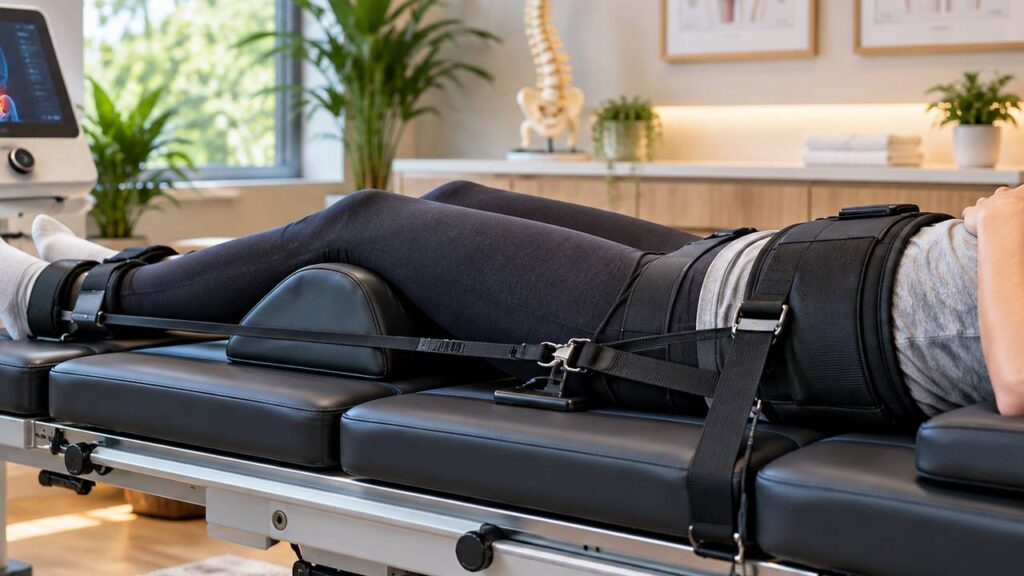
Spinal decompression therapy is a nonsurgical approach that uses controlled traction to gently stretch the spine.
Some clinics offer this treatment for selected patients experiencing disc-related discomfort.
However, research on mechanical spinal traction for bulging discs is mixed, and there is limited evidence that it consistently improves outcomes or pulls bulging discs back into place.
It should not be presented as a guaranteed solution or a replacement for appropriate medical evaluation and active rehabilitation.
Medication for Pain Management
Depending on your health history, a clinician may recommend short-term pain relief options.
These may include certain over-the-counter medications or prescription treatments.
Anti-inflammatory medicines are not suitable for everyone, particularly people with certain kidney, stomach, heart, or bleeding conditions.
Epidural Steroid Injections
For selected patients with significant radiating nerve pain, a medical specialist may consider an epidural steroid injection.
These injections may provide temporary symptom relief but do not repair the disc itself.
When Is Surgery Considered?
Surgery is usually not the first treatment for a bulging disc.
It may be considered when symptoms are severe, nerve-related problems continue despite appropriate care, or progressive neurological deficits develop.
The decision depends on clinical findings, imaging, symptoms, and the patient’s goals.
How to Fix a Bulging Disc: Daily Habits That Support Recovery
There is no single exercise or stretch that can instantly fix a bulging disc. However, small changes in your daily routine can help manage discomfort and support long-term spinal health.
Stay Gently Active
Walking is a simple way to keep your body moving without demanding too much from your back. Start with short walks and gradually increase your activity as symptoms allow.
Improve Your Sitting Habits
Use a comfortable chair that supports your lower back. Keep your feet supported and change positions regularly.
You do not need perfect posture all day. Regular movement is often more useful than trying to hold one position.
Lift Objects Carefully
Keep objects close to your body, avoid sudden twisting under heavy loads, and ask for help when lifting something too heavy.
Build Strength Gradually
Appropriate exercises can strengthen the muscles that support your back and hips. A healthcare professional can help you choose movements that do not aggravate your symptoms.
Find a Comfortable Sleeping Position
Some people feel better sleeping on their side with a pillow between their knees. Others prefer lying on their back with support beneath their knees.
Choose the position that helps you sleep comfortably.
Can a Chiropractor Help With Bulging Disc Pain?
Yes, a chiropractor may help some people manage pain and movement problems associated with a bulging disc.
However, chiropractic care does not guarantee that a bulging disc will return to its original shape.
A chiropractor for bulging disc symptoms should begin by understanding your medical history, examining your spine, and checking for signs of nerve involvement.
Depending on the findings, care may include gentle manual techniques, movement advice, exercise recommendations, or other appropriate conservative approaches.
Spinal decompression therapy may also be considered for selected patients, although its benefits are not consistent across all cases.
Who May Be a Suitable Candidate?
Chiropractic care may be considered when you have uncomplicated mechanical back pain, certain movement limitations, or stable symptoms that have been properly evaluated.
It may not be appropriate when there is progressive weakness, suspected spinal cord compression, fracture, infection, or another serious condition.
Manual treatments can cause temporary soreness or increased discomfort. Rare serious complications have been reported with spinal manipulation, particularly involving the neck, so treatment choice and informed consent matter.
The goal should be measurable improvement in pain and daily function, not simply attending more appointments.
When Should You Seek Urgent Medical Care?
Most bulging discs are not medical emergencies. However, certain symptoms can indicate serious nerve compression or another condition requiring immediate attention.
Seek emergency medical care if you develop:
-
New difficulty urinating or loss of bladder or bowel control
-
Numbness around the groin, genitals, or inner thighs
-
Rapidly worsening weakness in one or both legs
-
New severe difficulty walking, especially with weakness or loss of coordination
These symptoms can sometimes indicate cauda equina syndrome or spinal cord compression.
You should also seek prompt medical evaluation for significant pain following trauma, fever with back pain, or unexplained symptoms that continue to worsen.
Bulging Disc Care at Orenda Chiropractic in Reno, NV
If back pain, neck stiffness, or radiating discomfort is affecting your daily routine, an appropriate evaluation can help you understand your treatment options.
At Orenda Chiropractic, Dr. Travis Rodman provides chiropractic care in Reno, NV. The clinic also offers spinal decompression therapy, which may be considered for selected patients with disc-related symptoms.
The clinic’s listed services include:
The first priority is understanding your symptoms and whether chiropractic treatment is suitable for your condition. Some patients may benefit from conservative care, while others may need further medical assessment.
Location: Reno, NV
Website: Chiropractor in Reno, NV
Phone: (775) 636-7611
Map: Orenda Chiropractic – Reno, NV
Final Thoughts
Understanding what is a bulging disc can help you feel less worried about your spinal health, especially if you’ve recently seen the term on an imaging report. A bulging disc doesn’t always mean a serious problem or the need for surgery.
Many people improve with time, gentle activity, exercise, and appropriate conservative treatment. The key is finding out whether the disc is actually causing your symptoms.
If pain continues, spreads into your arms or legs, or affects your daily activities, consult a healthcare professional for an accurate diagnosis and personalized treatment plan.
Book an appointment with Orenda Chiropractic in Reno, NV, to discuss your symptoms, explore appropriate treatment options, and take the next step toward better spinal health.
Frequently Asked Questions
1. What Are the First Signs of a Bulging Disc?
Early symptoms may include lower back or neck pain, stiffness, and occasional tingling in an arm or leg. Some people have no symptoms at all. These signs are not specific to a bulging disc, so an examination may be needed.
2. Can a Bulging Disc Heal Without Surgery?
Yes. Many people with symptomatic bulging discs improve without surgery. Pain and nerve irritation may settle even if the disc remains visibly bulged on an MRI.
3. What Is the Best Treatment for a Bulging Disc?
There is no single best treatment for everyone. Staying active, exercise-based rehabilitation, and appropriate pain management are common starting points. Chiropractic care may help selected patients, while severe or persistent nerve problems may require specialist assessment.
4. How Long Does a Bulging Disc Take to Heal?
Many people begin feeling better within several weeks, but recovery varies. Nerve-related symptoms may take months to improve. The disc’s appearance on imaging may not return to normal even after symptoms resolve.
5. Can a Chiropractor Help With a Bulging Disc?
A chiropractor may help manage certain types of back pain and movement limitations associated with a bulging disc. Treatment should follow an appropriate examination, and no chiropractic technique is proven to reliably repair the disc itself.
6. Can Walking Make a Bulging Disc Worse?
Walking is often well tolerated and can be helpful during recovery. However, if walking causes increasing leg pain, numbness, or weakness, stop and seek professional guidance. Your activity plan should match your symptoms.