
Have you ever felt a sharp pain in your lower back that travels down your leg? Maybe your neck hurts, your fingers feel numb, or sitting for too long makes the discomfort worse. These symptoms can sometimes be caused by a herniated disc.
So, what does a herniated disc feel like? A herniated disc may cause sharp, burning, or shooting pain in your back, neck, arms, or legs. Some people also experience tingling, numbness, or muscle weakness. However, not everyone with a herniated disc experiences pain.
The symptoms depend on where the affected disc is located and whether it irritates a nearby nerve.
The good news is that many people improve without surgery. Understanding the symptoms and available treatments can help you make informed decisions about your recovery.
In this guide, we’ll explain what a herniated disc is, how to recognize its symptoms, what causes it, and how doctors diagnose it. We’ll also discuss recovery, chiropractic care, and spinal decompression therapy.
What Is a Herniated Disc?
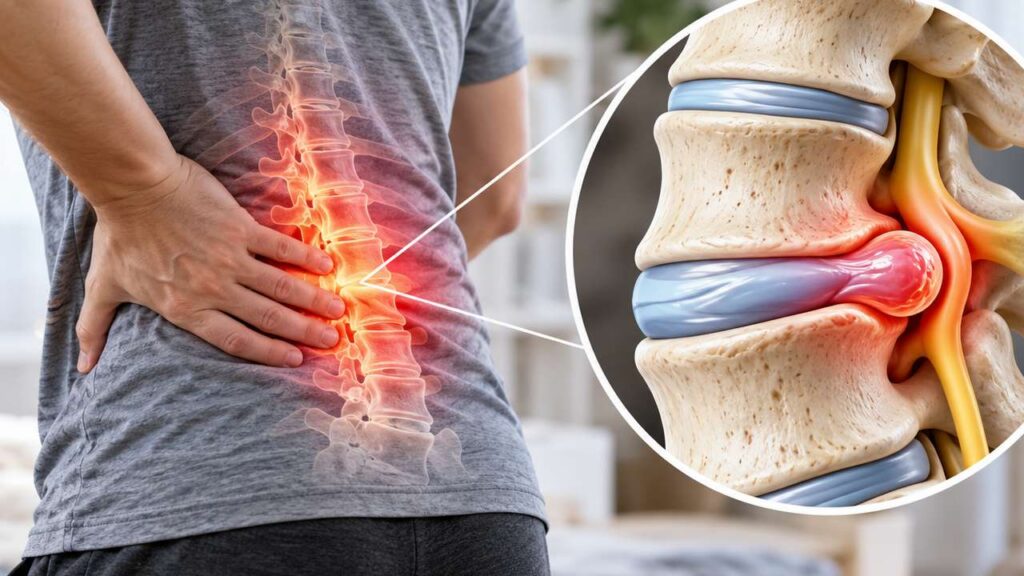
A herniated disc occurs when part of the soft center of a spinal disc pushes through a weakened or damaged area of its outer layer.
Your spine is made up of bones called vertebrae. Between most vertebrae are flexible discs that act as cushions, absorb shock, and help your spine move comfortably.
Each disc has two main parts:
-
Annulus fibrosus: The strong outer layer that helps hold the disc together.
-
Nucleus pulposus: The soft, gel-like center that helps absorb pressure.
When the inner material pushes through the outer layer, it creates a disc herniation. If that material presses against or irritates a nearby nerve, it can cause pain, tingling, numbness, or weakness.
Herniated discs most commonly affect the lower back (lumbar spine) and neck (cervical spine).
You may also hear the term slipped disc. Although commonly used, it doesn’t mean the entire disc has slipped out of place.
What Does a Herniated Disc Feel Like?
A herniated disc can feel different from ordinary muscle soreness, especially when a spinal nerve becomes irritated.
Some people experience a dull ache in their back or neck. Others notice sharp, electric-like pain traveling into an arm or leg.
Common sensations include:
-
Sharp or shooting pain: Sudden pain that may travel from the back into the buttock or leg.
-
Burning pain: A hot or burning sensation along an affected nerve.
-
Tingling: A pins-and-needles feeling in the arms, hands, legs, or feet.
-
Numbness: Reduced feeling in certain areas of the body.
-
Muscle weakness: Difficulty lifting the foot, gripping objects, or performing certain movements.
-
Localized discomfort: Aching or stiffness around the affected part of the spine.
Pain may become worse when sitting, bending, coughing, sneezing, or performing certain movements.
One important difference is that a herniated disc can cause pain away from the spine. For example, a disc in the lower back may irritate a nerve and cause pain that travels down the leg.
However, these symptoms are not unique to herniated discs. Other conditions can cause similar discomfort, and some herniated discs cause no symptoms at all.
Herniated Disc Symptoms in the Lower Back and Neck
The location of a herniated disc often determines where symptoms appear.
Herniated Disc Symptoms in the Lower Back
A lumbar herniated disc may cause lower back pain along with symptoms in the buttock, leg, or foot.
Common symptoms include:
-
Pain traveling from the lower back through one buttock and down a leg.
-
Tingling or numbness in the leg or foot.
-
Weakness when lifting the foot or standing on the toes.
-
Pain that worsens during certain movements or prolonged sitting.
Pain traveling down the leg is often called sciatica. It can occur when a herniated disc irritates a nerve root that contributes to the sciatic nerve.
Herniated Disc Symptoms in the Neck
A cervical herniated disc affects the neck and may irritate nerves traveling toward the shoulders, arms, and hands.
Symptoms may include neck pain, shoulder discomfort, tingling in the fingers, or weakness in the arm or hand.
Some people notice that turning or tilting their head makes the symptoms worse.
These patterns can help identify which nerve may be affected, but a professional examination is needed to determine the cause.
What Causes a Herniated Disc?
A herniated disc often develops because of gradual changes in the spine rather than one specific injury.
As people age, spinal discs naturally lose some water content and flexibility. This can make them more vulnerable to damage.
Other contributing factors include:
-
Repetitive strain: Frequent bending, lifting, or twisting may increase stress on spinal discs.
-
Heavy lifting: Lifting while twisting or using awkward movements may contribute to injury.
-
Excess body weight: Additional weight can increase mechanical demands on the lower back.
-
Smoking: Smoking is associated with spinal disc degeneration.
-
Genetics: Some individuals have an inherited tendency toward disc problems.
-
Physical injury: Falls, sports injuries, and accidents can sometimes contribute to herniation.
A herniated disc can also develop without an obvious trigger.
Although posture and prolonged sitting may aggravate symptoms, poor posture alone should not be assumed to be the cause of a disc herniation.
How to Know if You Have a Herniated Disc
If you have back pain that travels into your leg or neck pain accompanied by arm numbness, you may wonder how to know if you have a herniated disc.
The most reliable approach is a clinical evaluation.
A healthcare professional will usually begin by asking about your symptoms, medical history, and activities that make the pain better or worse.
Physical Examination
During an examination, your provider may assess your muscle strength, reflexes, sensation, walking ability, and spinal movement.
For suspected lumbar disc herniation, a straight-leg raise test may help identify nerve irritation.
However, no single physical test can confirm a herniated disc.
MRI and Other Imaging Tests
An MRI can show spinal discs, nerve roots, and surrounding soft tissues. It is generally the preferred imaging test when confirmation is necessary.
However, not everyone with suspected disc herniation needs an immediate MRI.
Imaging is more likely to be recommended when symptoms are severe, neurological problems are progressing, serious conditions are suspected, or symptoms persist despite appropriate treatment.
An X-ray cannot directly show a herniated disc, although it may help identify certain other spinal problems.
Importantly, MRI findings must match the patient’s symptoms. Some people have disc abnormalities on imaging without experiencing pain.
According to the World Federation of Neurosurgical Societies’ 2024 recommendations, clinical examination and appropriate imaging both play important roles in diagnosing lumbar disc herniation.
How to Treat a Herniated Disc
Treatment depends on the severity of symptoms, the affected nerve, and whether there is significant muscle weakness.
For many people, treatment begins with nonsurgical care.
Conservative Treatment Options
Activity modification: Avoid movements that repeatedly worsen symptoms, but try to remain gently active. Extended bed rest is generally discouraged.
Physical therapy: A physical therapist may recommend exercises to improve mobility, strengthen supporting muscles, and gradually restore everyday activities.
Medication: Certain pain-relieving or anti-inflammatory medications may help selected patients. Medication choices should account for individual health conditions and possible side effects.
Heat or cold therapy: Applying heat or cold may temporarily relieve discomfort, although it does not repair the damaged disc.
Epidural steroid injections: In selected cases, injections may provide temporary relief from nerve-related pain. They do not directly heal the disc.
When Is Surgery Necessary?
Surgery may be considered when significant symptoms continue despite appropriate conservative treatment or when neurological problems require specialist intervention.
A common procedure for lumbar disc herniation is a microdiscectomy, which removes disc material pressing on a nerve.
Surgery can provide meaningful relief for appropriately selected patients, particularly those with persistent leg pain, but it also carries risks.
Progressive weakness or emergency neurological symptoms should not be managed by simply waiting for nonsurgical treatment to work.
Can a Herniated Disc Heal on Its Own?
Yes, a herniated disc can improve without surgery, and some herniated disc material may gradually shrink or be reabsorbed by the body.
The immune system can help break down displaced disc material over time. As inflammation decreases, pressure and irritation around nearby nerves may also improve.
A 2024 meta-analysis involving 31 studies and 2,233 patients reported spontaneous disc resorption in approximately 70% of the studied patients receiving conservative treatment.
However, this percentage comes from selected research populations and does not mean every patient has a 70% chance of complete recovery.
How Long Does Recovery Take?
Many people begin noticing improvement within several weeks, while others may need several months.
Recovery depends on factors such as symptom severity, neurological involvement, general health, and the characteristics of the herniation.
Pain can improve even when a disc remains visible on MRI. Likewise, disc shrinkage does not always mean symptoms will disappear completely.
If symptoms persist, worsen, or interfere significantly with daily activities, a healthcare professional can reassess the diagnosis and treatment plan.
Can a Chiropractor Help With a Herniated Disc?
Yes, chiropractic care may help people manage pain, improve mobility, and move more comfortably when dealing with a herniated disc. It offers a nonsurgical approach that may be included in a broader treatment plan, depending on the patient’s symptoms and overall spinal health.
A chiropractor can evaluate your spine, identify areas of restricted movement, and assess whether your symptoms may be related to nerve irritation. Based on the findings, treatment may include gentle spinal mobilization, carefully selected chiropractic adjustments, movement guidance, and exercises to support mobility and daily activities.
Research suggests that spinal manipulation may provide modest improvements in pain and function for some people with lower back pain. However, evidence specifically supporting chiropractic manipulation for confirmed herniated discs remains limited.
Chiropractic care focuses on managing symptoms and supporting movement rather than physically pushing a herniated disc back into place. Treatment should always be tailored to the individual, with careful consideration of possible risks, including temporary soreness or worsening symptoms.
For people experiencing herniated disc symptoms, a qualified chiropractor can help determine whether conservative chiropractic care is appropriate or whether further medical evaluation is needed. Patients with progressive muscle weakness or other serious neurological symptoms require prompt medical assessment.
What Is Spinal Decompression, and Does It Work for a Herniated Disc?
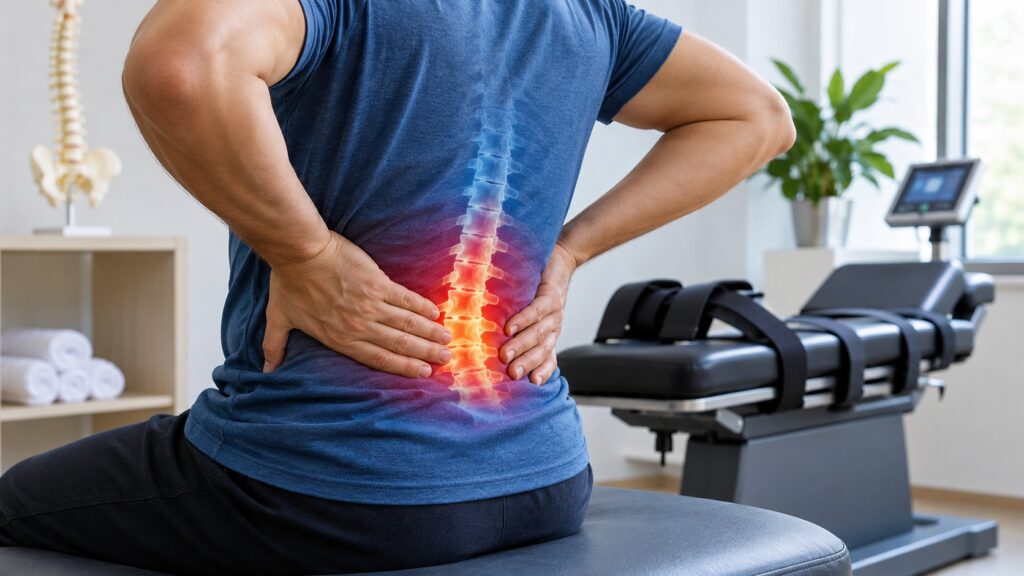
If you’re wondering what is spinal decompression, it is a nonsurgical treatment that uses controlled mechanical traction to apply a gentle pulling force to the spine.
The goal of nonsurgical spinal decompression is to temporarily reduce mechanical loading on certain spinal structures and potentially ease symptoms associated with nerve irritation.
During treatment, a patient typically lies on a specialized table while a device applies and releases traction forces.
Does Spinal Decompression Work for a Herniated Disc?
Does Spinal Decompression Work?
Some research suggests traction-based treatment may provide short-term improvements in pain and disability for certain patients with lumbar disc herniation.
A 2025 systematic review examined exercise, manipulation, and traction therapies. Although the results suggested possible benefits, differences between studies were substantial, limiting confidence in comparisons between treatments.
This means spinal decompression may help selected patients manage symptoms, but there is insufficient evidence that it reliably repairs herniated discs, permanently removes nerve compression, or prevents surgery.
It should be considered a possible part of a broader treatment plan rather than a guaranteed solution.
Is Spinal Decompression Safe?
Nonsurgical spinal decompression may be suitable for some patients, but it is not appropriate for everyone.
Potential concerns include increased pain or worsening neurological symptoms. Certain conditions, such as spinal instability, fractures, or serious spinal disease, may make traction unsuitable.
A qualified healthcare professional should review medical history, symptoms, and relevant imaging before recommending treatment.
Patients should report any worsening pain, numbness, or weakness during treatment.
When Is a Herniated Disc an Emergency?
Most herniated discs do not require emergency treatment. However, certain symptoms can indicate serious nerve compression.
Seek emergency medical attention if you experience:
-
New loss of bladder or bowel control.
-
Difficulty urinating together with new back or leg neurological symptoms.
-
Numbness around the groin, genitals, or inner thighs.
-
Rapidly worsening leg weakness.
These symptoms may indicate cauda equina syndrome, a rare but serious condition requiring urgent evaluation.
New or worsening weakness in an arm or leg also warrants prompt medical assessment, even without bladder or bowel symptoms.
Do not delay emergency evaluation to try chiropractic care, spinal decompression, or home exercises.
Chiropractic Care for Back Pain in Reno, NV
If you’re experiencing persistent back pain, neck discomfort, or symptoms that may be related to a herniated disc, a professional evaluation can help you understand your options.
At Orenda Chiropractic in Reno, Nevada, Dr. Travis Rodman provides chiropractic care for patients seeking help with musculoskeletal concerns.
The clinic offers:
For patients with suspected disc-related symptoms, the appropriate first step is determining whether chiropractic care may be suitable or whether additional medical evaluation is needed.
Location: Reno, NV
Website: Chiropractor in Reno, NV
Phone: (775) 636-7611
Map: Orenda Chiropractic – Reno, NV
Final Thoughts
Understanding what does a herniated disc feel like can help you recognize symptoms such as sharp pain, burning sensations, tingling, numbness, or muscle weakness. These symptoms may travel into your arms or legs when a herniated disc irritates nearby nerves.
The good news is that many people improve with time and appropriate nonsurgical care. Physical therapy, activity changes, suitable medications, and selected chiropractic treatments may help manage discomfort and improve mobility.
Recognizing your symptoms and understanding their cause is an important first step toward choosing the right treatment.
If you’re experiencing back pain, neck discomfort, or symptoms of a herniated disc, Orenda Chiropractic in Reno, NV, offers personalized chiropractic care and spinal decompression therapy for suitable patients.
Book an Appointment with Orenda Chiropractic today to discuss your symptoms, explore your treatment options, and find out whether chiropractic care may be right for you.
Frequently Asked Questions
1. How do I know if my pain is from a herniated disc?
A herniated disc may cause pain traveling into an arm or leg, often accompanied by tingling, numbness, or weakness. However, these symptoms can have several causes. A medical history, physical examination, and sometimes an MRI are needed to identify the problem.
2. Can a herniated disc heal without surgery?
Yes. Many people improve with conservative treatment, and some herniated discs shrink naturally over time. Recovery varies, and symptom relief does not always require the disc to disappear completely.
3. Is walking good for a herniated disc?
Gentle walking is often helpful if it does not worsen symptoms. Start with manageable distances and adjust your activity based on how you feel. Stop and seek medical advice if walking produces increasing weakness or neurological symptoms.
4. Can a chiropractor fix a herniated disc?
Chiropractic care may help manage certain musculoskeletal symptoms, but an adjustment has not been shown to reliably repair a herniated disc. Treatment decisions should depend on a proper examination and the available evidence.
5. Does spinal decompression permanently fix a herniated disc?
There is insufficient evidence that nonsurgical spinal decompression permanently repairs a herniated disc. Some patients may experience symptom relief, but results vary, and treatment should be individualized.
About the Author
Dr. Travis Rodman — Chiropractor in Reno, NV
Dr. Travis Rodman grew up in Woodland, Washington. His experience working in construction and industrial machining inspired his interest in helping people dealing with physical strain and everyday musculoskeletal challenges.
He attended Life Chiropractic College West from 2015 to 2018. During his training, he gained experience working with athletes, older adults, individuals with scoliosis, and families.
Before establishing Orenda Chiropractic in Reno, Nevada, Dr. Rodman practiced in Atlanta, the San Francisco Bay Area, and the Mariana Islands.
His approach focuses on individualized chiropractic care and helping patients make informed decisions about their musculoskeletal health.