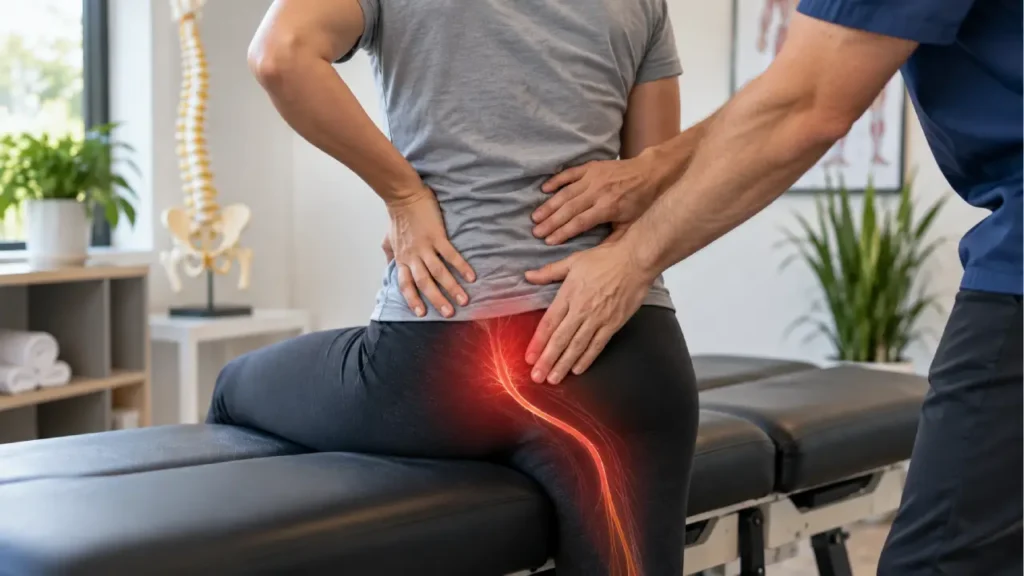
If pain starts in your lower back and travels through your buttock and down your leg, you may be dealing with sciatica. The pain can range from a mild ache to sharp, burning, or electric-like discomfort that makes sitting, walking, sleeping, or exercising difficult.
One question often comes up when people are looking for relief: can a chiropractor help with sciatica?
In some cases, chiropractic care may help manage sciatica symptoms and improve movement, particularly when the symptoms are related to musculoskeletal problems in the lower back. Treatment should begin with an evaluation because sciatica has several possible causes, and not every case should be treated the same way.
This guide explains what sciatica is, what causes it, how chiropractic care may help, what treatment can involve, what you can do at home, and when symptoms require medical attention.
Understanding Sciatica
Sciatica describes pain or other symptoms that follow the path of the sciatic nerve. The sciatic nerve is formed by nerve roots in the lower spine and travels through the buttocks and into the leg.
Unlike ordinary low back pain, sciatica commonly affects one side of the body and may travel from the lower back or buttock into the thigh, calf, or foot.
Symptoms can include:
-
Sharp or shooting pain
-
Burning or electric-like pain
-
Tingling or pins and needles
-
Numbness
-
Leg or foot weakness
-
Pain that becomes worse with certain movements
-
Lower back or buttock discomfort
Sciatica is a symptom rather than a single disease. The underlying cause needs to be identified before an appropriate treatment plan can be chosen.
What Are the Causes of Sciatica Pain?
Understanding the causes of sciatica can make treatment decisions much easier.
Common causes include:
-
Herniated or bulging discs: Disc material can irritate or compress a nearby nerve root.
-
Spinal stenosis: Narrowing around the spinal canal or nerve pathways can place pressure on spinal nerves.
-
Degenerative changes: Age-related changes in the spine can sometimes contribute to nerve irritation.
-
Spondylolisthesis: One vertebra can shift relative to another and reduce available space for a nerve.
-
Musculoskeletal problems: Problems involving the lower back, pelvis, or surrounding muscles can sometimes produce symptoms that resemble or contribute to sciatic pain.
Not every person with leg pain has true sciatica. That is why an examination is important before assuming that the sciatic nerve is the source.
Can a Chiropractor Help With Sciatica?
So, can a chiropractor help with sciatica? In appropriate cases, yes.
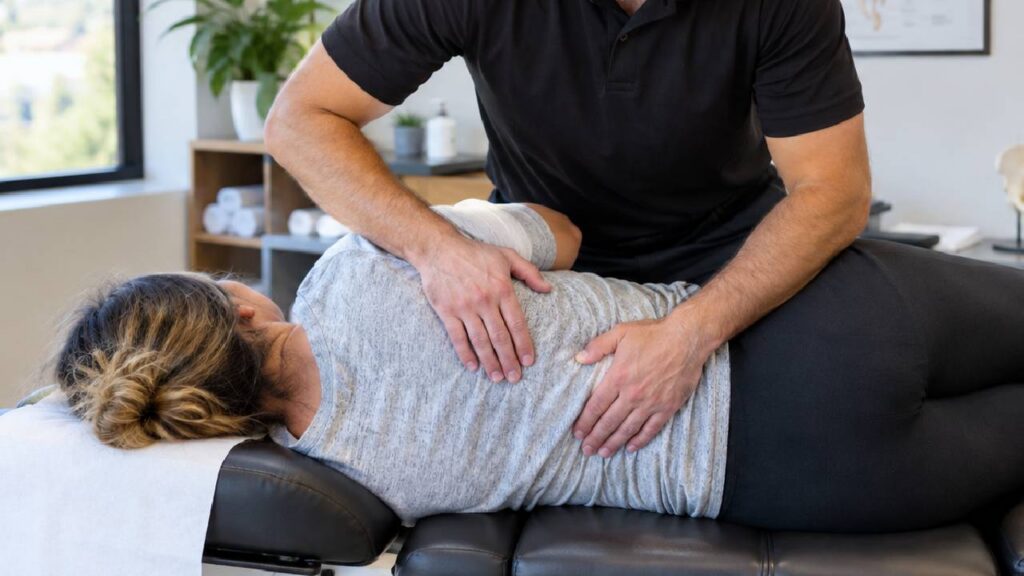
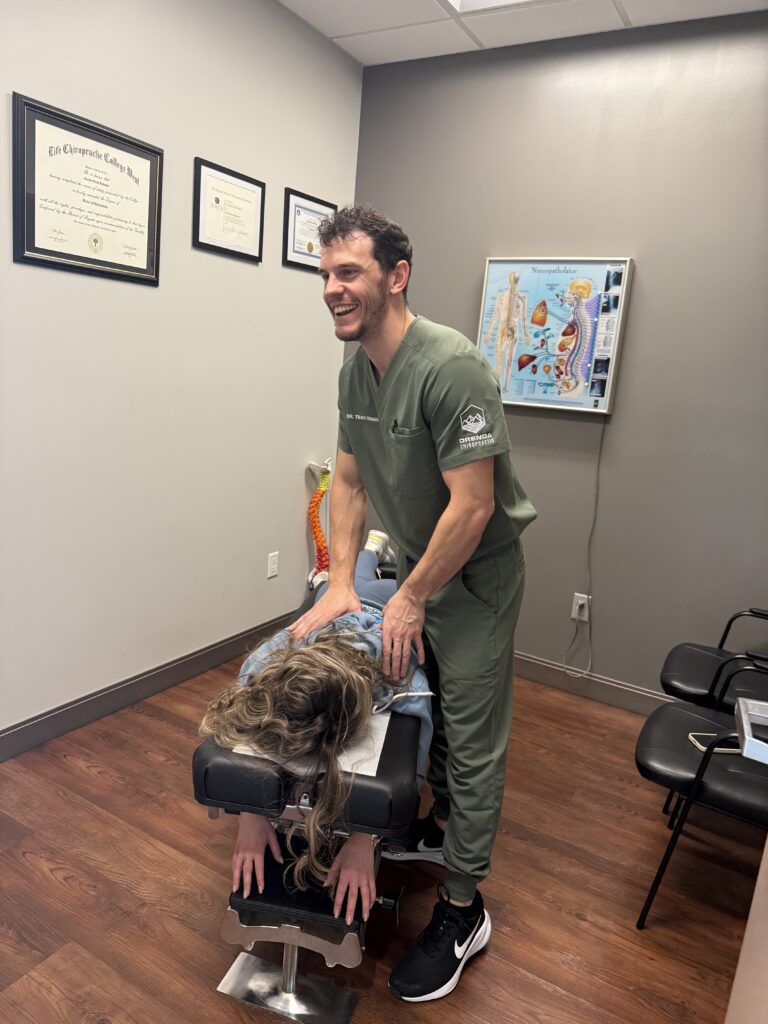
A chiropractor can evaluate the spine and surrounding musculoskeletal structures, look for movement restrictions or other contributing factors, and determine whether chiropractic treatment is appropriate.
For some people, treatment may include spinal adjustments, mobility work, exercises, or spinal decompression therapy. The goal is generally to improve movement and reduce mechanical stress on affected structures rather than simply cover up the symptoms.
Research on spinal manipulation for sciatica suggests that it may provide some patients with pain and functional benefits, although the evidence is not uniform and treatment results vary. The National Center for Complementary and Integrative Health notes that research on manipulation for sciatica has limitations and that benefits should be considered in the context of an overall care plan.
That means chiropractic care should be viewed as one potential conservative treatment option—not a guaranteed cure for every cause of sciatica.
Chiropractic Care for Sciatica
Chiropractic care for sciatica focuses on understanding why symptoms are occurring and choosing care that matches the patient’s condition.
The first visit may include:
-
A discussion of your symptoms and medical history
-
Questions about when the pain started and what makes it better or worse
-
A physical and musculoskeletal examination
-
Assessment of movement, strength, and neurological symptoms when appropriate
-
A review of previous imaging or medical records when available
-
A discussion of treatment options and whether referral is needed
Imaging is not automatically necessary for every person with sciatica. When imaging is appropriate depends on the symptoms, examination findings, history, and whether there are signs of a more serious problem.
How Does a Chiropractor Treat Sciatica Pain?
There is no single chiropractic treatment that works for every case.
Depending on the evaluation, a chiropractor may use:
-
Spinal adjustments
-
Mobility-focused treatment
-
Spinal decompression therapy
-
Stretching and movement recommendations
-
Strengthening exercises
-
Lifestyle and ergonomic guidance
The specific approach should depend on the suspected source of the symptoms, symptom severity, medical history, and response to care.
How Chiropractors Relieve Sciatic Nerve Pain
Chiropractors may aim to relieve sciatic nerve pain by improving spinal and joint movement and addressing musculoskeletal factors that may be contributing to symptoms.
For example, restricted movement in the lower back or surrounding joints can affect how a person moves. Improving mobility may make normal daily activities easier and can be part of a broader recovery plan.
However, chiropractic treatment does not physically “push” every compressed nerve back into place. Sciatica can have different causes, and some conditions require evaluation or treatment from another healthcare professional.
The most useful question is therefore not simply whether a chiropractor can treat sciatica, but whether your specific cause of sciatic symptoms is appropriate for chiropractic care.
How Chiropractic Treatment Helps Sciatica Pain
A well-designed treatment plan may help by:
-
Improving spinal or joint mobility
-
Supporting normal movement patterns
-
Reducing musculoskeletal discomfort
-
Helping patients return to normal activity
-
Addressing contributing lifestyle or movement factors
Chiropractic treatment may also be combined with an active recovery plan. Gentle movement and appropriate exercises are generally preferable to prolonged bed rest for many people with sciatica.
Benefits of Chiropractic Care for Sciatica
The potential benefits of chiropractic care for sciatica depend on the underlying cause and the individual patient.
Potential benefits may include:
-
Less pain or discomfort
-
Improved mobility
-
Better tolerance for everyday activities
-
Reduced stiffness
-
Support for an active recovery
-
A conservative treatment option for appropriate musculoskeletal conditions
It is important to keep expectations realistic. Chiropractic care cannot guarantee that sciatica will disappear permanently, and some cases need medical, neurological, orthopedic, or surgical evaluation.
The goal is to choose the safest and most appropriate treatment based on the cause.
When to See a Chiropractor for Sciatica
You may consider a chiropractic evaluation if sciatic-type pain is interfering with your normal activities, especially when symptoms are persistent or keep returning.
Consider an evaluation if you have:
-
Persistent leg pain
-
Tingling or numbness
-
Difficulty moving normally
-
Pain that interferes with work, exercise, or sleep
-
Symptoms that have not improved with reasonable self-care
-
Repeated episodes of similar pain
A chiropractor can also determine whether your symptoms appear appropriate for chiropractic care or whether another healthcare professional should evaluate you.
When Sciatica Requires Urgent Medical Attention
Some symptoms should not be managed by simply scheduling routine chiropractic care.
Seek urgent medical attention if you develop new or worsening:
-
Loss of bladder or bowel control
-
Difficulty starting urination or inability to urinate
-
Numbness around the genitals, buttocks, or inner thighs
-
Significant or progressive weakness in the legs
-
Severe symptoms affecting both legs
These can be warning signs of serious nerve compression, including cauda equina syndrome, which requires urgent assessment.
This is one of the most important differences between ordinary sciatic pain and symptoms that may represent a medical emergency.
Top Chiropractic Techniques for Sciatica Relief
Treatment should always be individualized, but several techniques may be considered when appropriate.
Spinal Adjustments
Spinal adjustments use controlled manual forces to influence the movement of specific spinal joints.
For a patient with a musculoskeletal condition that responds to manual treatment, an adjustment may help improve mobility and reduce discomfort.
The technique used depends on the patient’s symptoms, examination findings, health history, and tolerance.
Spinal manipulation can cause temporary soreness, stiffness, or increased discomfort in some people. These effects are usually short-lived, but patients should discuss their medical history and any concerns with their provider before treatment.
Spinal Decompression Therapy
Spinal decompression therapy is a non-surgical treatment designed to apply controlled forces to the spine.
It is sometimes used for patients with certain disc-related or spinal conditions. The purpose is to alter loading around the affected spinal segment and may be incorporated into a broader treatment plan.
It is important not to describe decompression as a guaranteed method of “pulling a disc back into place.” Whether it is appropriate depends on the individual’s diagnosis and clinical findings.
At Orenda Chiropractic in Reno, spinal decompression is one of the services offered by the practice.
Exercise and Movement Support
Active recovery can be an important part of sciatica pain relief.
Depending on the individual, a care plan may include exercises that support:
-
Hip mobility
-
Core strength
-
Lower-body strength
-
Movement control
-
Flexibility
The right exercises depend on the underlying condition. A movement that feels helpful for one person may aggravate symptoms in another.
How to Relieve Sciatica Pain at Home
People often search for how to relieve sciatica pain without medication or procedures.
Simple measures may help support recovery:
-
Stay gently active rather than spending long periods in bed.
-
Take short walks if walking is comfortable.
-
Change positions regularly when sitting.
-
Avoid movements that clearly aggravate your symptoms.
-
Use heat or cold if either provides comfort.
-
Follow exercises recommended by a qualified healthcare professional.
-
Use good posture and comfortable support when sitting.
Current patient guidance recommends continuing normal activity as much as possible and avoiding prolonged sitting or lying down. Gentle exercise can also support recovery.
Home care can help manage symptoms, but persistent or worsening pain deserves professional evaluation.
Sciatica Treatment: What to Expect Over Time
Sciatica treatment does not follow one fixed timeline.
Some episodes improve over several weeks, while others can last longer depending on the underlying cause. Treatment may therefore change as symptoms change.
A typical conservative care process may include:
Evaluation → symptom management → movement restoration → strengthening → reassessment
During treatment, the provider should monitor how symptoms respond rather than continuing the same approach regardless of progress.
If symptoms are not improving, become more severe, or new neurological symptoms develop, the treatment plan may need to change.
How to Get Rid of Sciatica Pain for Good
Searching for how to get rid of sciatica pain can make it tempting to look for one permanent fix.
Unfortunately, there is no universal cure because sciatica has multiple possible causes.
Long-term management usually depends on addressing the underlying problem and reducing factors that may contribute to repeated irritation.
Depending on the person, this can involve:
-
Appropriate clinical treatment
-
Regular physical activity
-
Strength and mobility exercises
-
Better sitting and lifting habits
-
Gradual return to exercise
-
Weight management when appropriate
-
Workplace or ergonomic changes
-
Follow-up care when symptoms return
The objective should be sustainable improvement rather than simply chasing short-term pain relief.
What to Expect During Sciatica Pain Treatment From a Chiropractor
Your first appointment should focus on understanding your symptoms rather than immediately performing a treatment.
A typical evaluation may involve discussing:
-
Where the pain starts
-
Where it travels
-
How long you’ve had symptoms
-
Whether you have numbness or tingling
-
Whether you have noticed weakness
-
What activities aggravate your symptoms
-
Previous injuries or spinal problems
-
Previous treatment and imaging
Your chiropractor may then explain whether chiropractic care is appropriate and what treatment options may be considered.
At Orenda Chiropractic, the practice states that new patients receive a health-history review and physical examination before a treatment approach is determined.
Chiropractic Care for Sciatica in Reno, NV
If you’re searching for chiropractic care for sciatica in Reno, Orenda Chiropractic provides chiropractic care and spinal decompression therapy.
The practice’s sciatica page specifically addresses sciatic nerve pain and states that its chiropractic team evaluates the condition and develops a treatment plan.
Why an Individualized Approach Matters
Sciatica is not the same for everyone.
Two people may both have pain traveling down one leg but have completely different underlying problems. One may have a disc-related issue, while another may have a movement or musculoskeletal problem.
That is why treatment should begin with an evaluation rather than assuming that one technique is right for everyone.
About Orenda Chiropractic in Reno, NV
If you’re looking for a chiropractor for sciatica pain treatment in Reno, Orenda Chiropractic offers several services that may be relevant to different stages of care.
Services offered include:
The clinic’s website confirms chiropractic care and spinal decompression as available services, while its other service pages describe prenatal, athlete, auto injury, and wellness care.
For someone experiencing sciatica, the appropriate service depends on the cause and individual circumstances. The clinic should evaluate the condition before recommending a treatment approach.
Location: Reno, NV
Website: Chiropractor in Reno, NV
Phone: (775) 636-7611
Map: Orenda Chiropractic – Reno, NV
If your sciatic symptoms are affecting your ability to work, exercise, sleep, or enjoy everyday activities, an evaluation can help you understand what may be contributing to the problem and whether chiropractic care is appropriate for you.
Conclusion
So, can a chiropractor help with sciatica?
For some people, chiropractic care can be a useful conservative option for managing sciatica-related symptoms, particularly when the problem is related to musculoskeletal or spinal factors that respond to conservative care.
Treatment may include spinal adjustments, spinal decompression therapy, movement recommendations, and other supportive strategies. The right approach depends on the cause, severity, health history, and response to treatment.
Just as importantly, sciatica should not automatically be treated as a routine back problem. New bladder or bowel problems, saddle-area numbness, or significant worsening leg weakness require urgent medical evaluation.
If you’re in Reno and dealing with persistent sciatic pain, start with a proper evaluation rather than trying to guess which treatment you need.
Frequently Asked Questions
Can a chiropractor help with sciatica?
Yes. Chiropractic care may help some people with sciatica by improving spinal and musculoskeletal function and supporting movement. The appropriate treatment depends on the underlying cause.
How does a chiropractor treat sciatica pain?
A chiropractor may evaluate the spine and surrounding structures and use treatments such as spinal adjustments, spinal decompression, mobility work, and exercise recommendations when appropriate.
How long does sciatica take to improve?
The timeline varies. Some cases improve over several weeks, while others persist longer depending on the underlying cause. If symptoms persist or worsen, seek professional evaluation.
Is chiropractic care safe for sciatica?
Chiropractic treatment is generally well tolerated when a qualified provider selects and performs it appropriately. However, some people may experience temporary soreness or discomfort after spinal manipulation. A proper evaluation is important before treatment.
When should I see a doctor instead of a chiropractor for sciatica?
Seek urgent medical attention for new bladder or bowel problems, numbness around the genitals or buttocks, or significant or worsening weakness in the legs. These symptoms can indicate serious nerve compression.